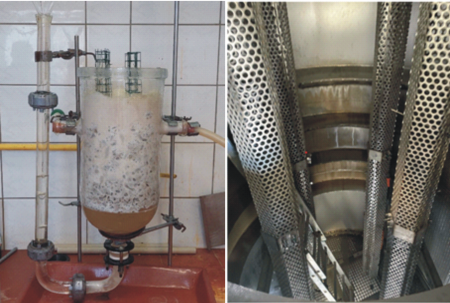




Plasma processing and industrial applications
Do you want to work with technologies capable of handling conditions comparable to those in the interiors of stars? Our team is engaged in the research and development of advanced materials using low-temperature plasma – a unique tool capable of reaching temperatures up to 30,000 K. That is enough to process even the most resistant substances, such as tungsten or ultrahard ceramic materials.
In collaboration with the Institute of Plasma Physics of the Czech Academy of Sciences, we use the globally unique water-stabilized plasma generator, WSP®, which opens entirely new possibilities in surface treatments and material synthesis. We develop protective coatings against corrosion, thermal barriers for extreme stress, and self-supporting ceramic structures applicable in energy, aerospace, and space technologies.
Plasma is not just about materials. Thanks to high temperatures and intense UV radiation, we also use it to decompose hazardous bioorganic substances and to explore new approaches to environmental protection.
Our work is not limited to the laboratory space – together with the Department of Inorganic Technology at UCT Prague, we closely collaborate with industry on the development of special materials, nanotechnologies, superhard substances, and pigments. Many of our results are protected by patents and find real-world applications in practice.
If you are drawn to the combination of chemistry, physics, materials engineering, and truly extreme conditions, with us you can be part of developing technologies that shape the future.
What will you experience as a student?
With us, you won’t just stick to theory. Already during your studies, you will get involved in real research and work with technologies that are usually accessible only to experienced professionals.
- Working with plasma technologies – from material preparation to their processing at extreme temperatures on the order of tens of thousands of kelvins.
- Creating and testing protective coatings – you will learn to prepare anti-corrosion layers, thermal barriers, and ceramic coatings for demanding industrial applications.
- Development of advanced materials – oxide, carbide, and nitride ceramics, superhard materials, and functionally graded structures.
- Modern experimental methods – plasma spraying, microstructure characterization, measurement of mechanical and thermal properties of materials.
- Collaboration with industry and top research institutions – involvement in real projects, internships, and solving practical problems.
- Working on topics with real-world impact – environmental applications of plasma, new technologies, and patent-protected solutions.
You will gain experience that holds real value not only in research but also in industry – and you will see how a laboratory experiment becomes a technology with real-world impact.
Research Topics
- Decomposition of fluorinated hydrocarbons and freons using the Glid-Arc method
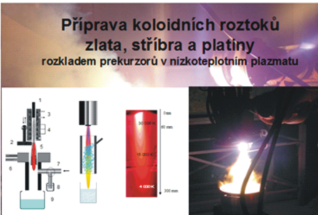
- Silver, gold, and other metal nanoparticles prepared in thermal plasma
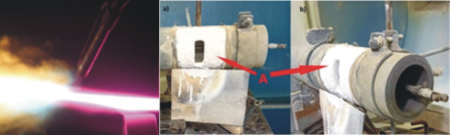
- Materials resistant to hydrogen fluoride at extreme temperatures
- Disposal of waste from explosive initiator production
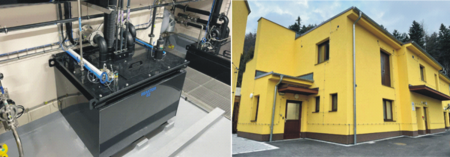
- Preparation and modification of properties of new primary explosives
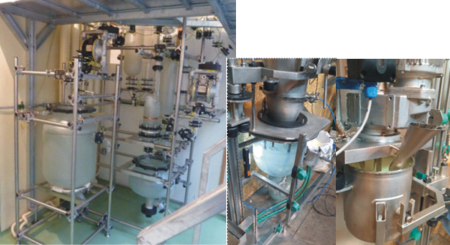
- Disposal of explosive charges from ignition systems
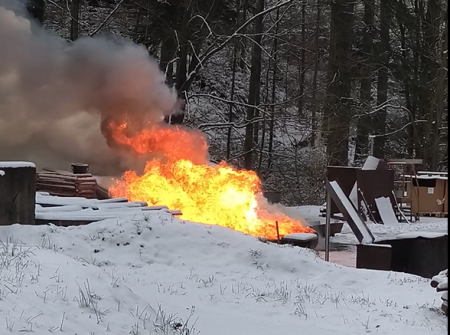
- Rocket propellant component production technology
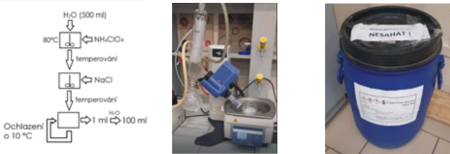
- Photocatalytic properties of materials
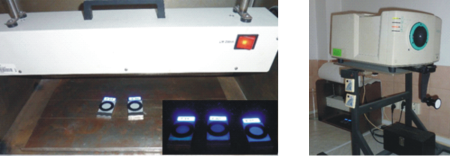
- Cryogenic granulation in liquid nitrogen
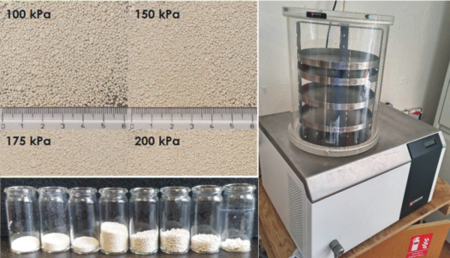
- Development of banknote security features

- Production of calcium nitrate