






TEM
1. 4. 2026
Vlastimil Mazánek
1. Sample selection
- TEM samples should be thin, clean, and electron-transmissive – samples with a thickness > 100 nm are not appropriate for TEM. The thinner the better.
- Before sending samples for TEM, please make a proper selection of your samples and think about why you need such analysis for your research. If by the time you request TEM analysis, you already have results about the morphological and structural properties of your materials, think about how and why TEM data will add value to your research.
- Select your samples based on the previous questions. For example, if you are comparing the performance of 6 samples for a particular application, do you need TEM analysis for all 6 samples? Do they all have promising properties and performance that justify being characterized as TEM? TEM is a costly characterization technique – in time and resources – so use common sense and be a critic.
- When delivering the samples for analysis, please fill out the form used for Central Labs from the UCT. Try to fill it out as best as possible (do not forget to include the project number from which the analysis costs will be debited).
- Please include in the form information about the main differences between samples, what analysis you want, include details about the crystalline phase (if you wish to perform SAED analysis), and other information you consider relevant for good analysis. If you have representative SEM images of your samples, including one of each type, it will help a lot. If it is easier, you can send this information to my email.
2. Grid sample preparation (the most critical part):
- Do it in a clean place;
- Use Lacey carbon films on Cu TEM Grids;
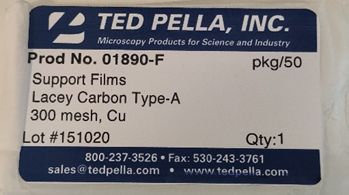
- Do your samples have Cu in their chemical composition? Au TEM grids should be used – ask about it before the sample preparation.
- Use only samples from well-diluted suspensions, as very concentrated samples will result in many agglomerates of material. However, it is essential to find an ideal concentration for a decent dilution – do not make your colleague spend half an hour looking for a sample on an almost empty grid.
- If your sample is the result of an electrochemical exfoliation process, wash it as well as possible because all the salts and other chemicals that were part of the exfoliation process can influence the quality of the TEM analysis;
- Drop cast the sample (typically, 3 – 5 µL is enough) on the carbon side (the darker side) of the grid, not on the Cu side;
- Do not dip the grid into the suspension;
- Plan the sample preparation because you do not know if other people are using the tweezers for the same purpose, or maybe you won’t know where the grids are, or how to prepare the samples, and you need help. It is never a good idea to do it at the last minute.
- It is not always possible, but the most convenient is to dry the samples in an oven where no other material is being dried – it is essential to avoid any contamination. You can also dry at room temperature if you have time/patience.
- Use a separate box for the prepared grid to be analyzed. Do not mix your prepared grids with new grids in the same box – it is essential to avoid contamination of the new grids that will be used in the future.
- Are you not sure about the quality of your suspension/sample/grid preparation? Go to the SEM lab and do STEM/EDX analysis – check the presence of agglomerates, confirm the (un)expected chemical elements, possible contaminations, etc. If your STEM analysis is precise, then your samples are ready for TEM analysis.
- If you are asking another person from the group to do STEM/EDX for you, please do not give them/thousands of samples, or even if you are doing it by yourself, please think about the consumption of resources when doing it. Again, it is essential to do a good selection of samples.
- Last but not least, plan the TEM analysis: there are more TEM users, many people asking for TEM analysis (remember again about the sample selection), and unforeseen events may occur (to the microscope and the person who is analyzing your samples) – again, plan it and do not wait for the last minute to require TEM analysis.